6 min read
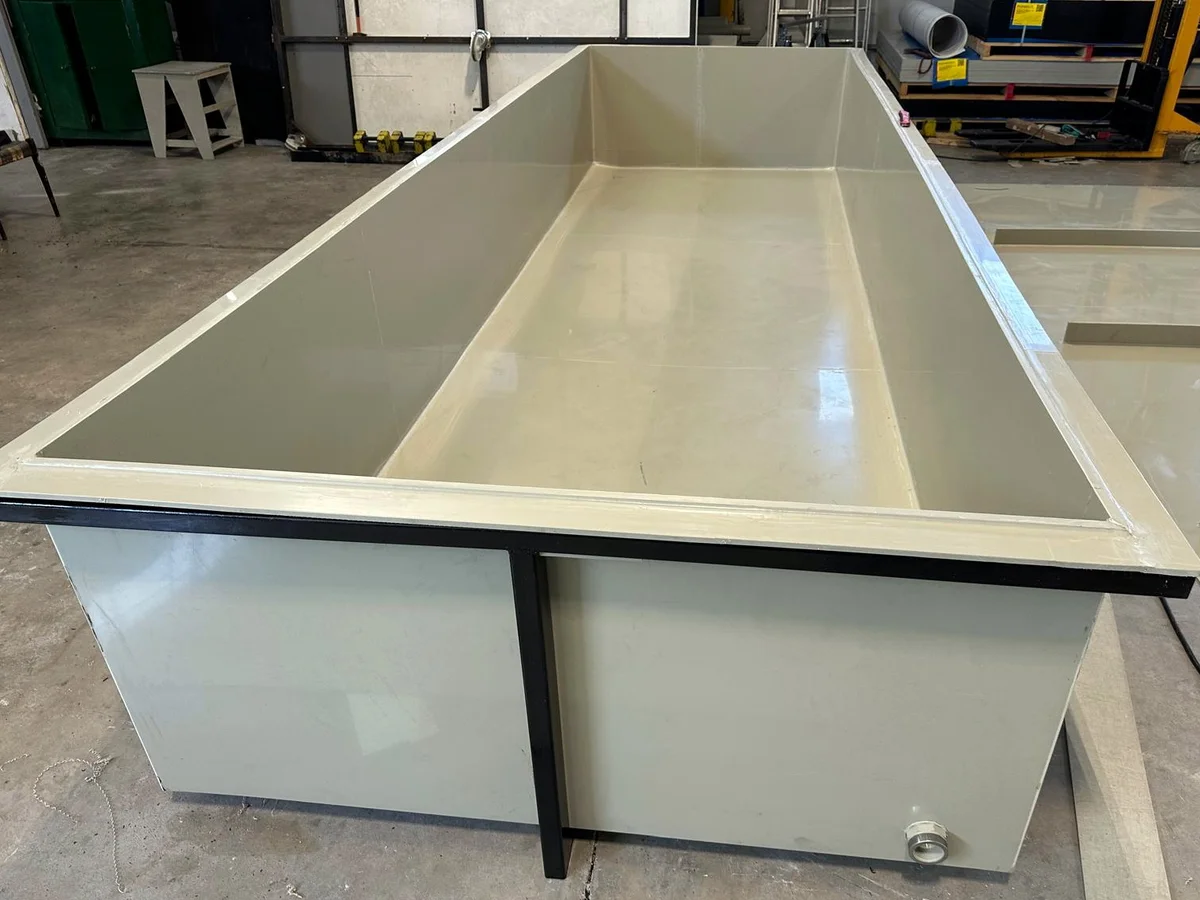
For galvanizing, tank material is confirmed from real chemistry: substance, concentration, temperature, contact time and accessories. A generic table helps as orientation, and technical verification defines the appropriate solution.
Quick specification table
| Existing Weldplast data | Welded PP, lined metal frame, max. 70°C, acidic/basic mediaFrom the special applications page; limits depend on actual chemistry. |
|---|---|
| Materials to discuss | PP; PVDF where chemistry/temperature requires itPVDF is mentioned in industrial capabilities; choice remains project verification. |
| Dimensions | Made to order, in any dimensionThere are no fixed standard sizes; include usable space, working level, freeboard and reinforcements. |
| Accessories | PVC valves, fittings, flanges, bubbling, ventilationAccessories mentioned on the special applications page. |
Chemical compatibility — preliminary table
Common acids / alkalis
PP possible
Confirm concentration, temperature and contact time before quoting.
Oxidizers / solvents / high temperatures
Special check
May require another material, PVDF or a separately engineered solution, after reviewing the bath chemistry.
Compatibility is checked on the real bath
The same substance can behave differently at different concentrations and temperatures. Include contaminants, additives, cleaning cycles and temperature peaks.
For any galvanizing bath, request chemical data sheets and material confirmation before fabrication.
Mechanical details matter too
Length, width, height, working level, liquid weight, support, ribs and metal frame decide the build.
Include ventilation, bubbling, overflow or covers in the sketch so the quote covers the important parts.
Galvanizing tank checklist
- 1Substances, concentrations and normal/maximum temperature.
- 2Usable volume, working level and any dimensions required by the line.
- 3Liquid weight, support, frame and handling access.
- 4Fittings, valves, overflow, bubbling, ventilation.
- 5Secondary containment or anticorrosive lining requirements.
- 6Material certificates come from the material supplier, according to its certificates; Weldplast welding/fabrication is DVS-certified.
Short FAQ
Does PP resist every acid?
Resistance is confirmed by acid, concentration, temperature and contact time; the team can check the right material per project.
When should PVDF be discussed?
PVDF is worth discussing when chemistry, temperature or contact time call for a material beyond PP; confirmation is project-specific.
Can we publish a complete compatibility table?
A complete table is published only with validated material and chemical data. This guide gives orientation, and final checks happen per project.
Useful links
Have the bath chemistry list?
Send substances, concentrations, temperature and sketch for a verifiable PP/PVDF tank.
Request QuoteSources and limits
- Existing Weldplast content: special applications mention welded PP galvanizing tanks, lined metal frame, max. 70°C, acidic/basic media, ventilation and accessories.
- Public Weldplast project: 2025 industrial galvanizing tanks, welded PP and chemical resistance.
- Complete compatibility tables, thicknesses, chemical warranties and prices are confirmed per project, through technical review and a quote.