01
How a process tank differs from a storage tank
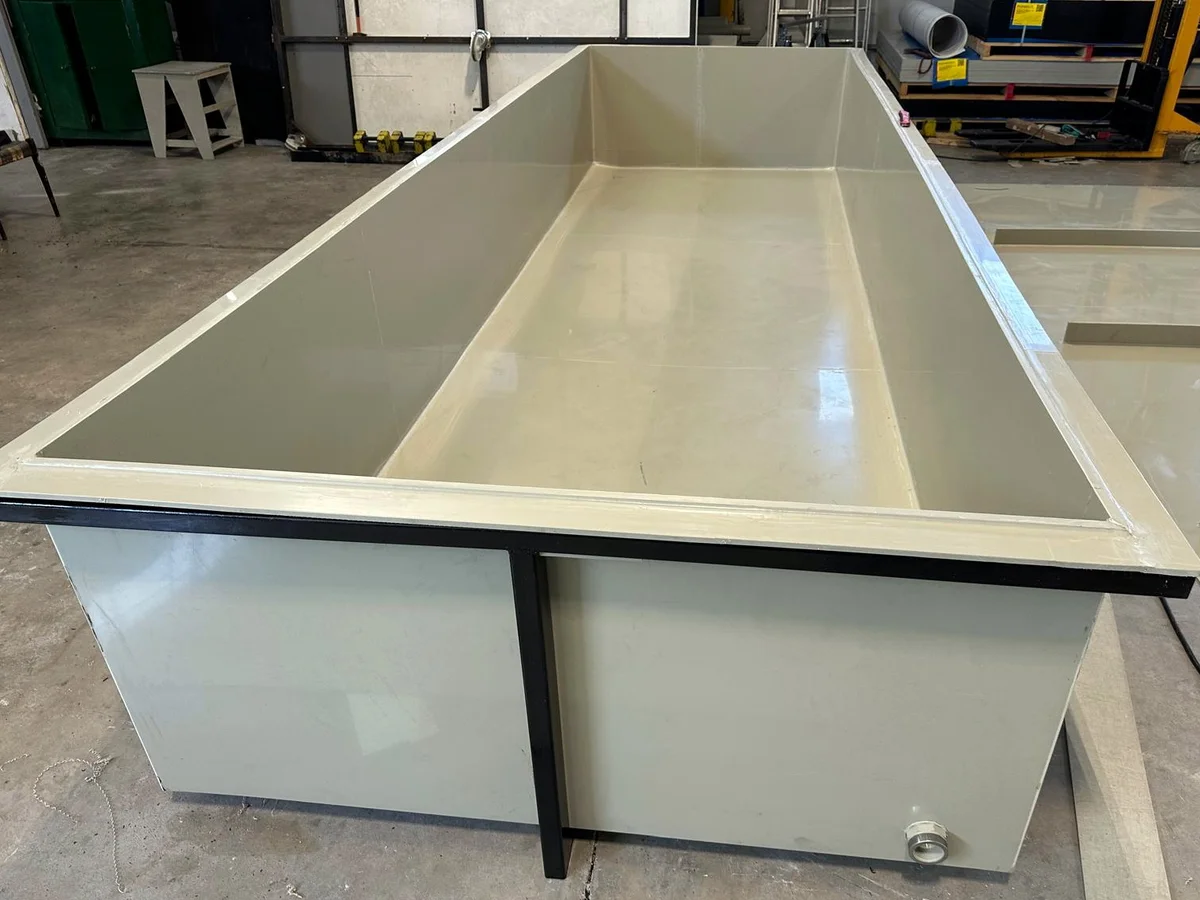
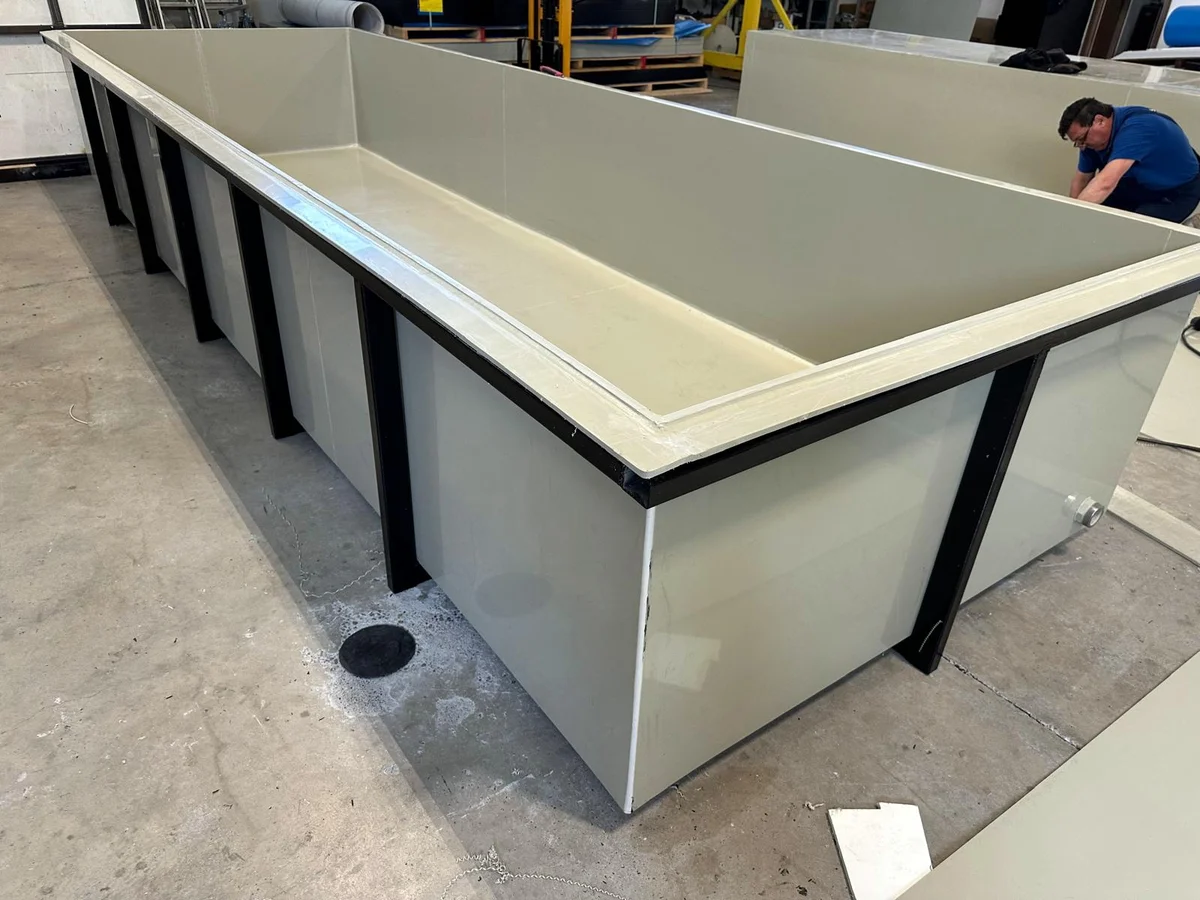
A storage tank holds liquid. A process tank works with it: parts go in and out of the bath, an agitator mixes, the solution is heated, dosed or drained after every batch. That changes what matters: open or closed design, the rim that carries racks and supports, ribs that take the hydrostatic load, and operator access.
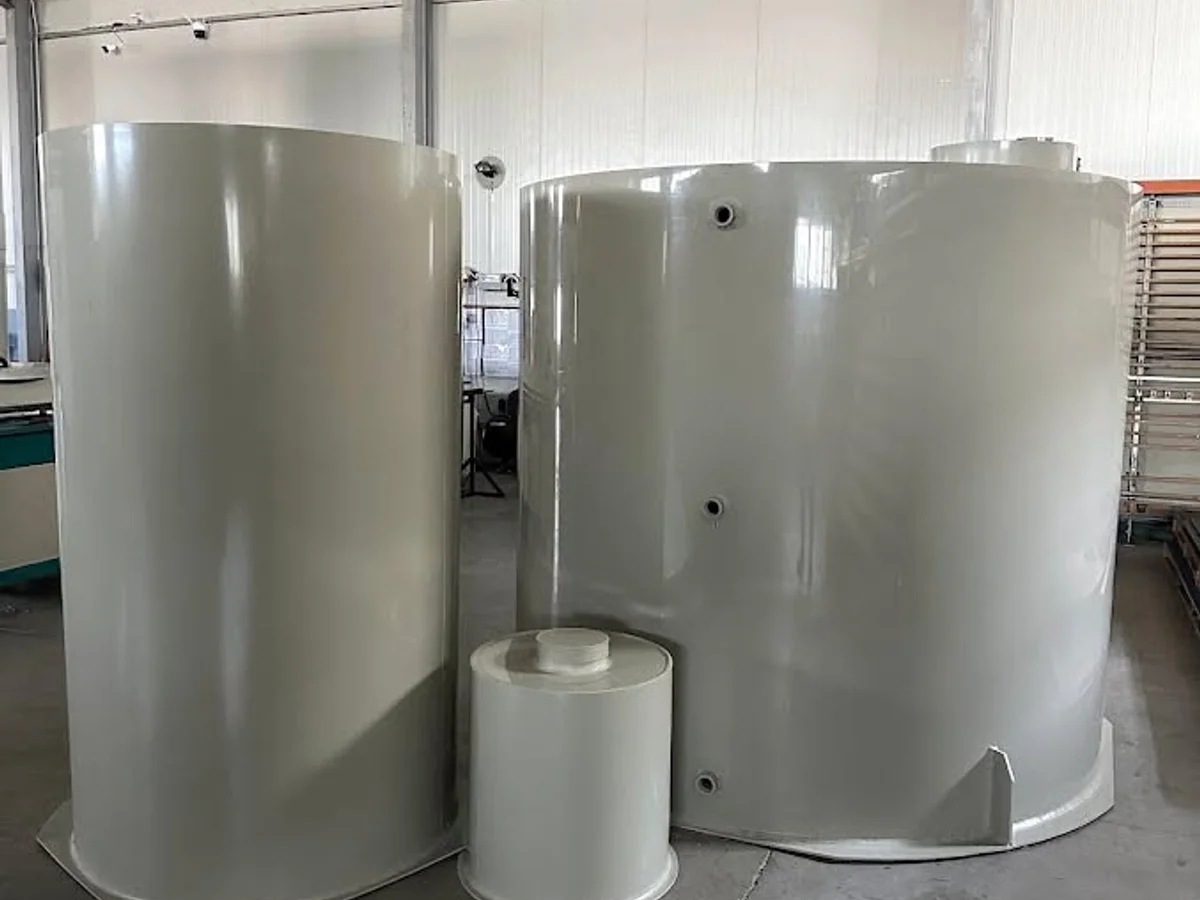
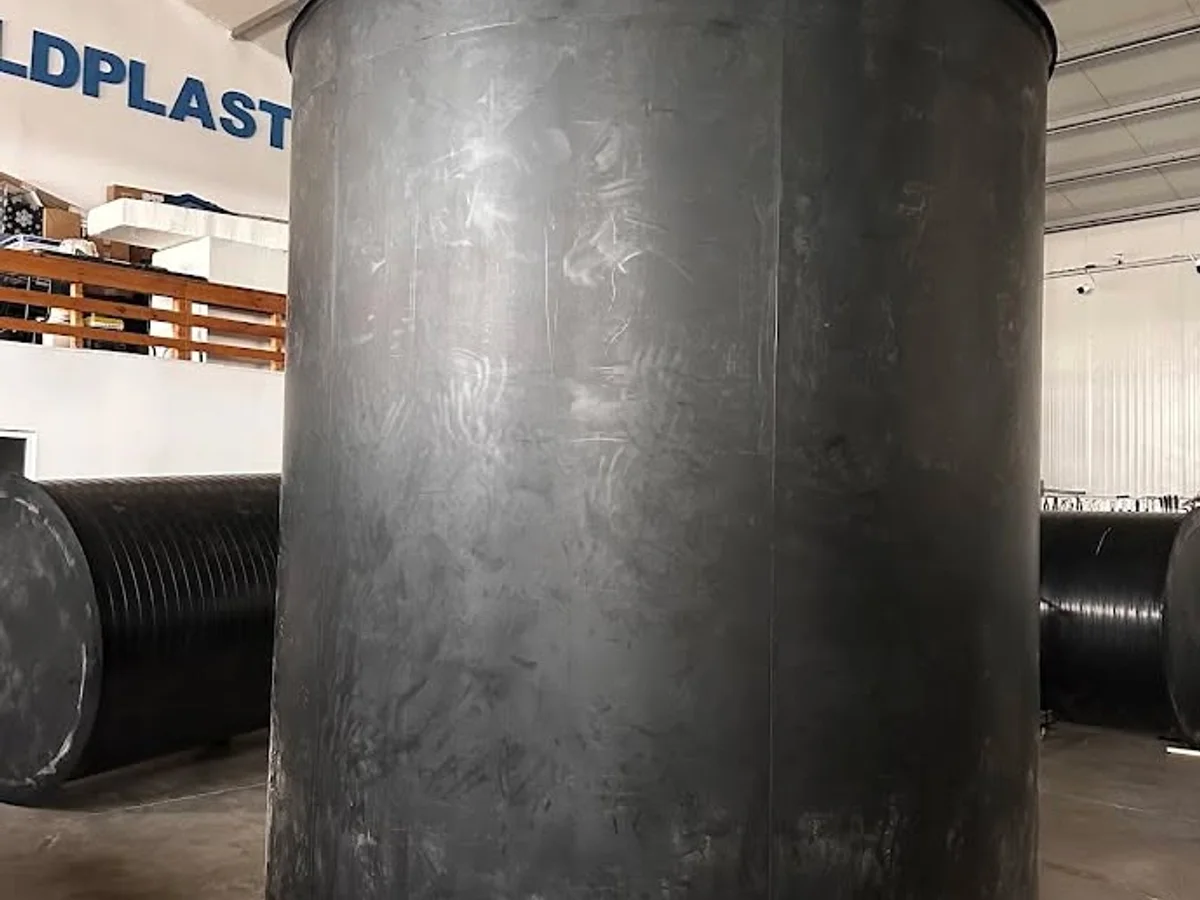
Weldplast welds process tanks from PP-H, HDPE, PVC and PVDF sheet, each one sized to your line. There is no catalogue of standard sizes. We start from the floor space, the working level and what happens inside the tank, then choose the material, wall thickness and structure.
02
Send us your drawing: what it should show
About half of the customers who ask us for tanks send a drawing or a spec with the first email. It is the fastest route to an accurate quote. A dimensioned hand sketch or a photo of the tank you are replacing also works; we clear up the rest with questions.
On the drawing or in the email we need: dimensions, stating whether they are internal or external, maximum working level, the liquid with its concentration and safety data sheet, normal and maximum temperature, the agitator (weight, speed, mounting flange), lid type, drain and nozzle positions, how the tank stands (on the floor, on a frame or on wheels) and the delivery address.
If the drawing comes from your engineering team or an equipment maker, we keep the interface dimensions and only propose what belongs to thermoplastic fabrication: wall thickness, ribs, frame and weld type. Any deviation from your drawing is agreed with you before production.
03
Material, wall thickness and temperature are set per project
PP-H is the usual material for plating baths, pickling tanks and degreasing tanks. HDPE suits many aqueous solutions and dosing tanks, while PVC and PVDF come in when the bath chemistry or temperature calls for them.
We do not pick the material from a generic resistance chart. Material, wall thickness and concentration and temperature limits are set for each tank from the material manufacturer's data sheets and a static calculation to DVS 2205. For welded PP plating baths we work to a maximum of 70 °C; above that we discuss PVDF or another solution.
Large or heated tanks are stiffened with ribs in the same material or with a fully clad steel frame, so the steel never touches the solution.
04
Agitator, lid, heating and drain: the details that change the build
An agitator tank is designed around the agitator. The mounting bridge is sized for its weight, torque and flange, and welded baffles help mixing where the process needs them. If you already have the agitator, send its data sheet with the drawing.
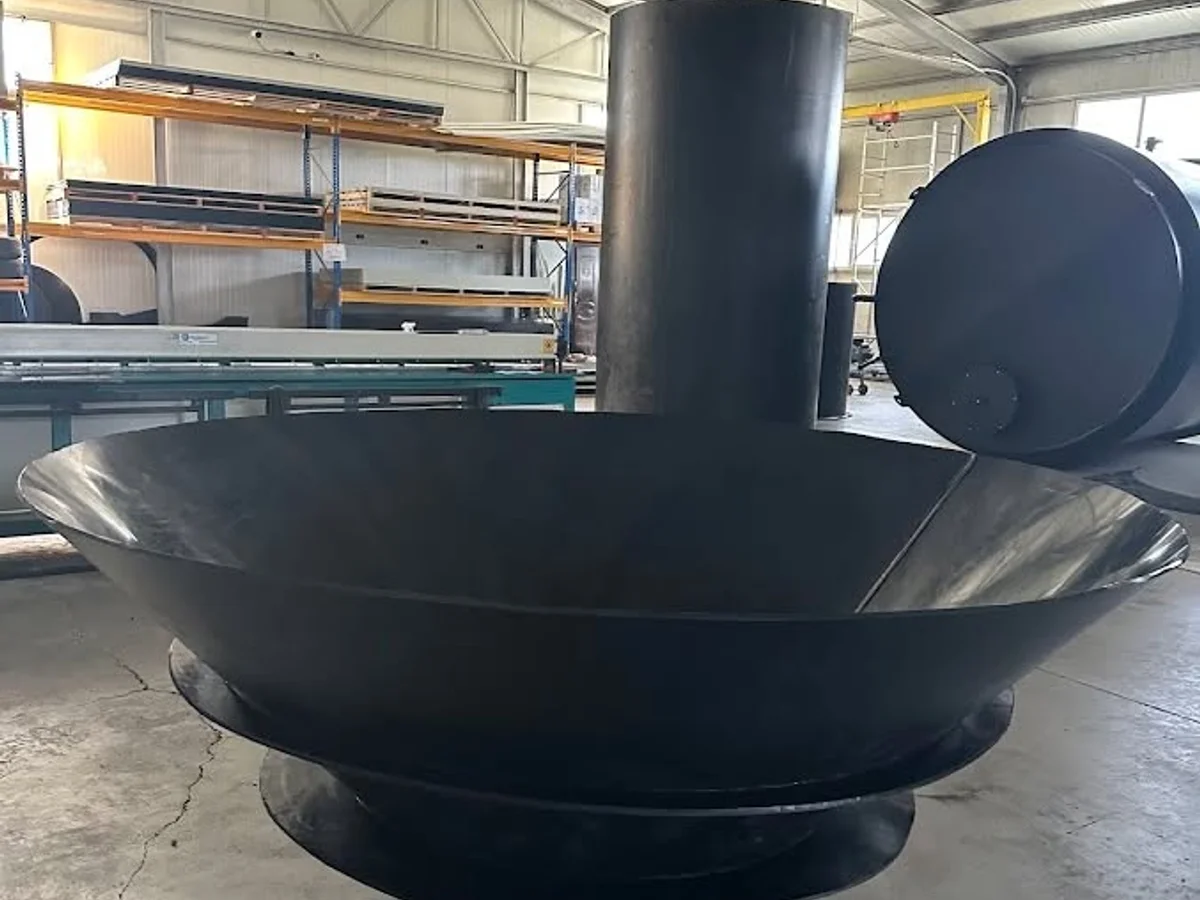
Lids can be fixed or removable, with a manway, grate or vent connection. For baths that give off fumes we weld PP or PE hoods and ductwork. The bottom can slope towards the drain so the tank empties fully when the bath is changed.
Insulation and temperature holding are agreed per project: we have delivered insulated tanks, including a temperature-holding system for a production line. Level indicators can be fitted on request, and for hazardous chemicals the tank can be double-walled or sit in a containment bund.
05
Delivery across the EU and to the US
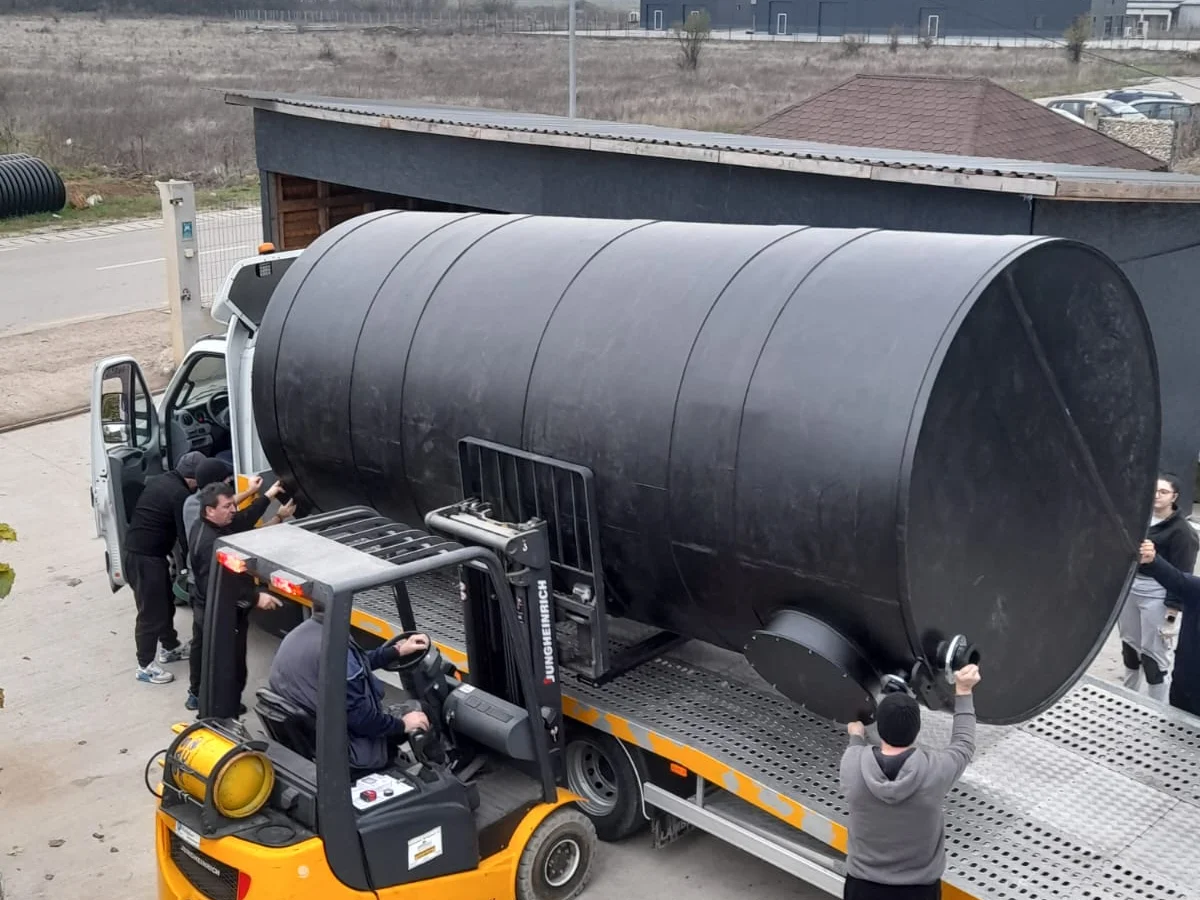
Process tanks leave our workshop in Romania for customers at home and abroad. We have delivered welded equipment to Denmark, Greece, Serbia and the United States.
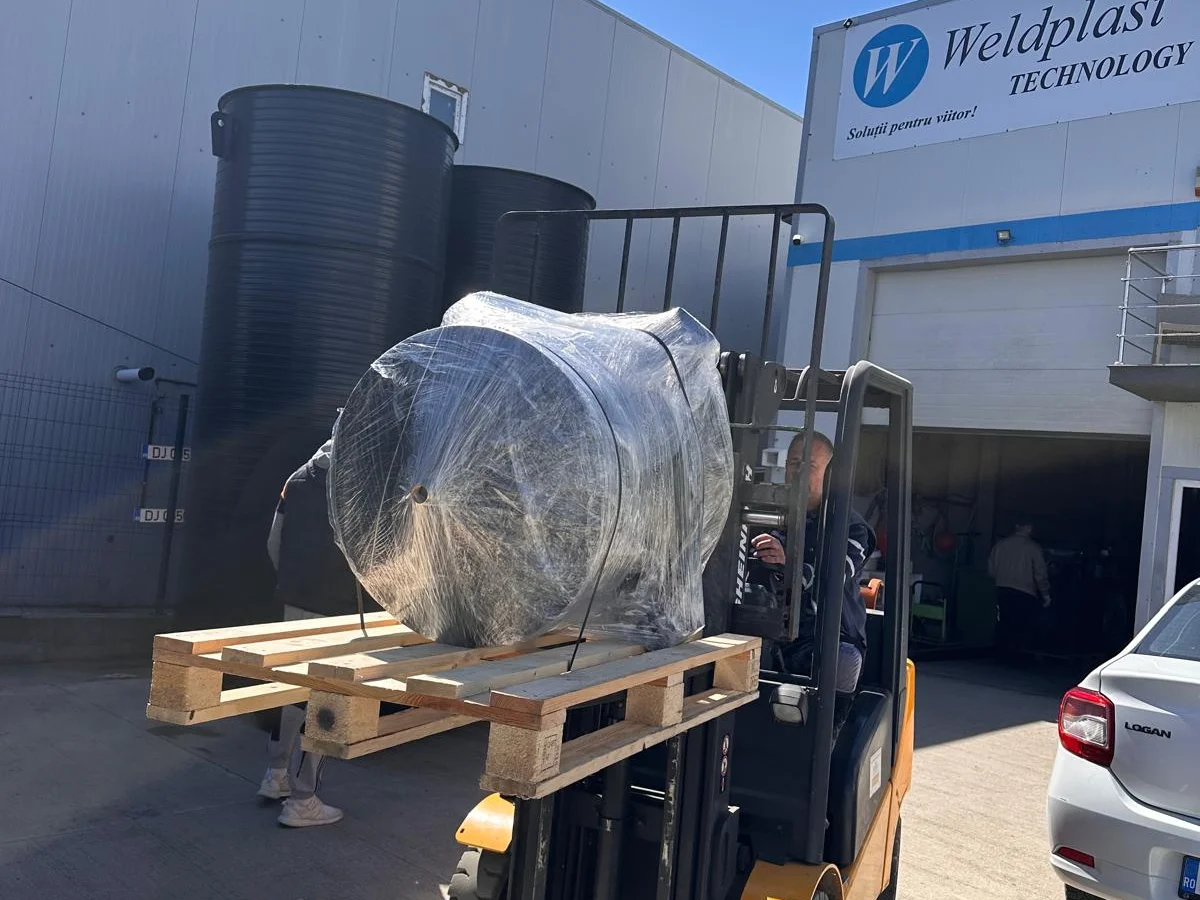
For export, tell us the country and delivery address up front, and how the tank gets into your building: doors, overhead crane, forklift. Transport dimensions and lifting points are fixed together with the drawing, not after fabrication, so the tank arrives in one piece and fits where it has to go.