Hydrochloric acid (HCl) and chemical storage tanks
Acid storage

Hydrochloric acid (HCl) and chemical storage tanks

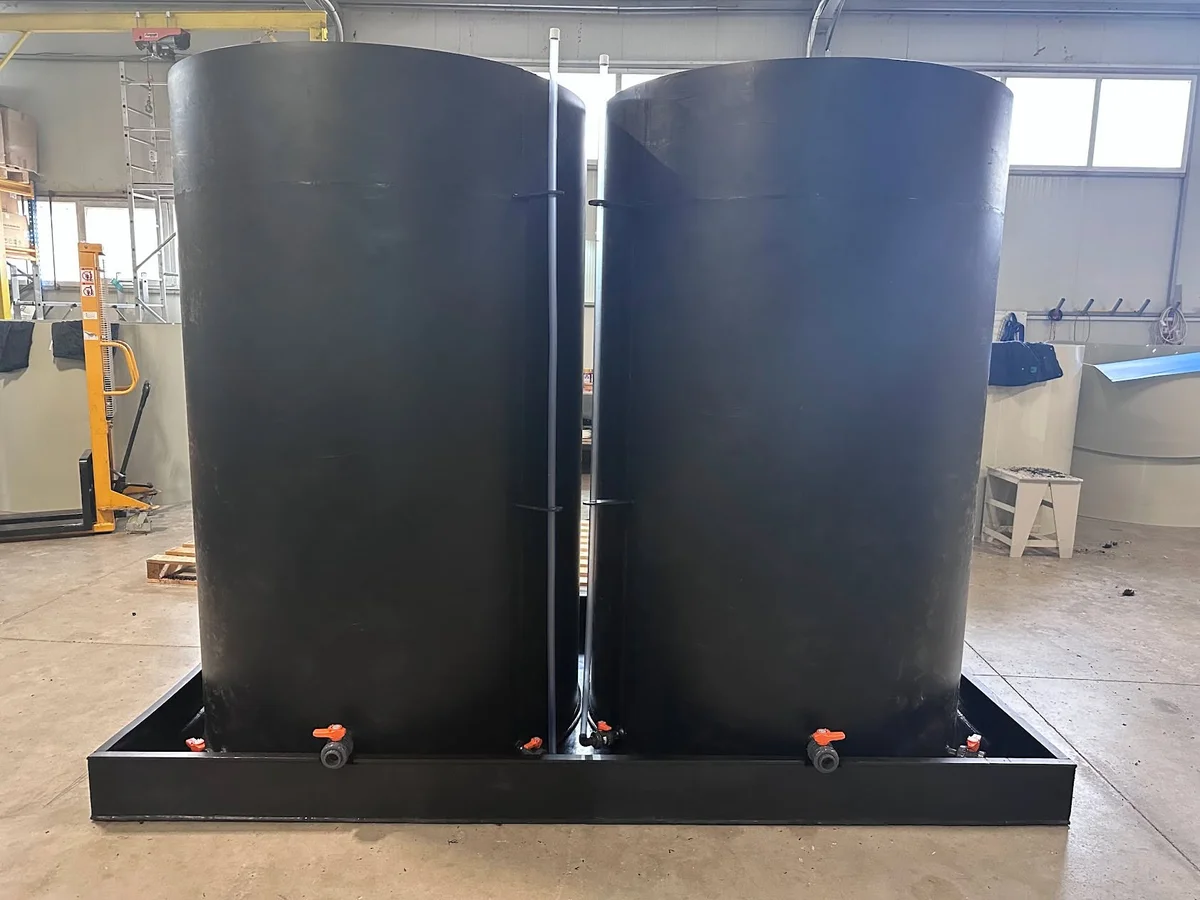
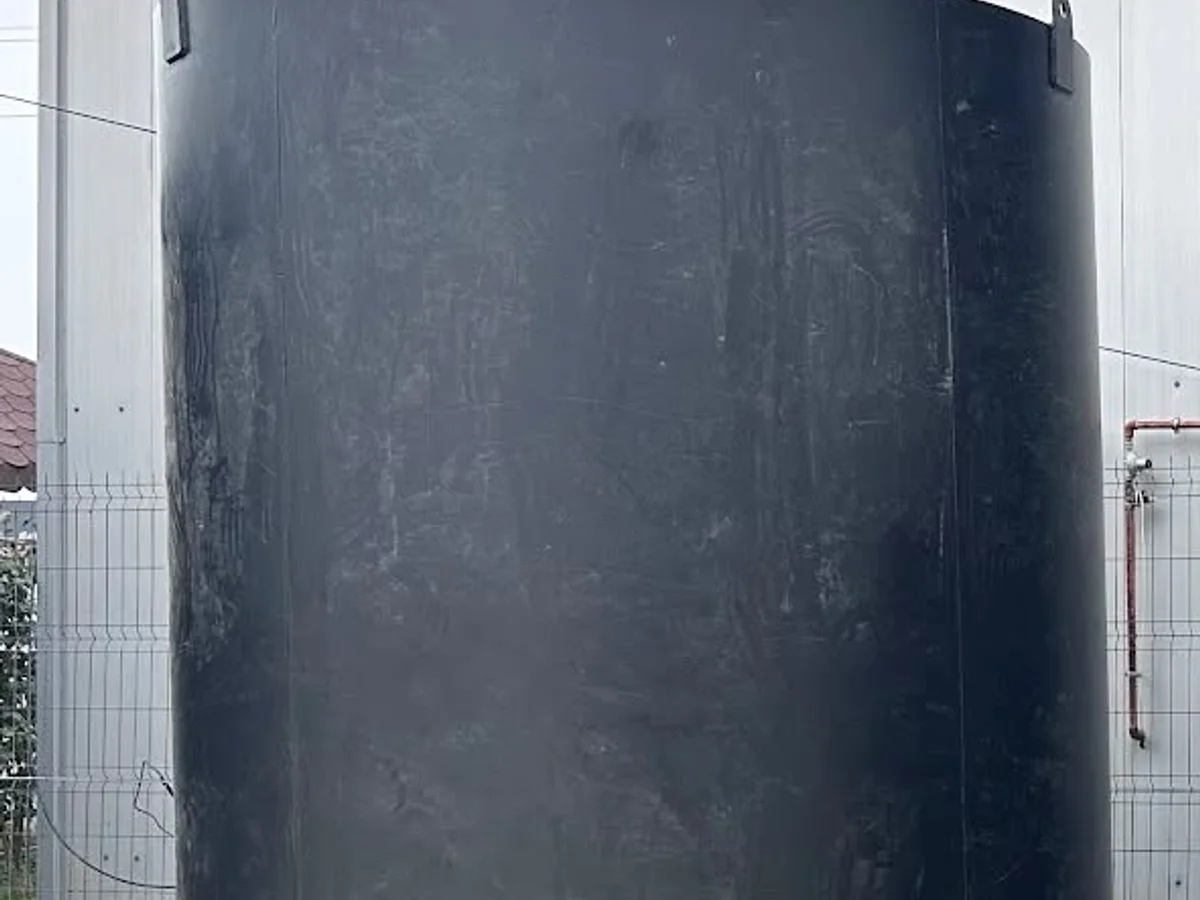
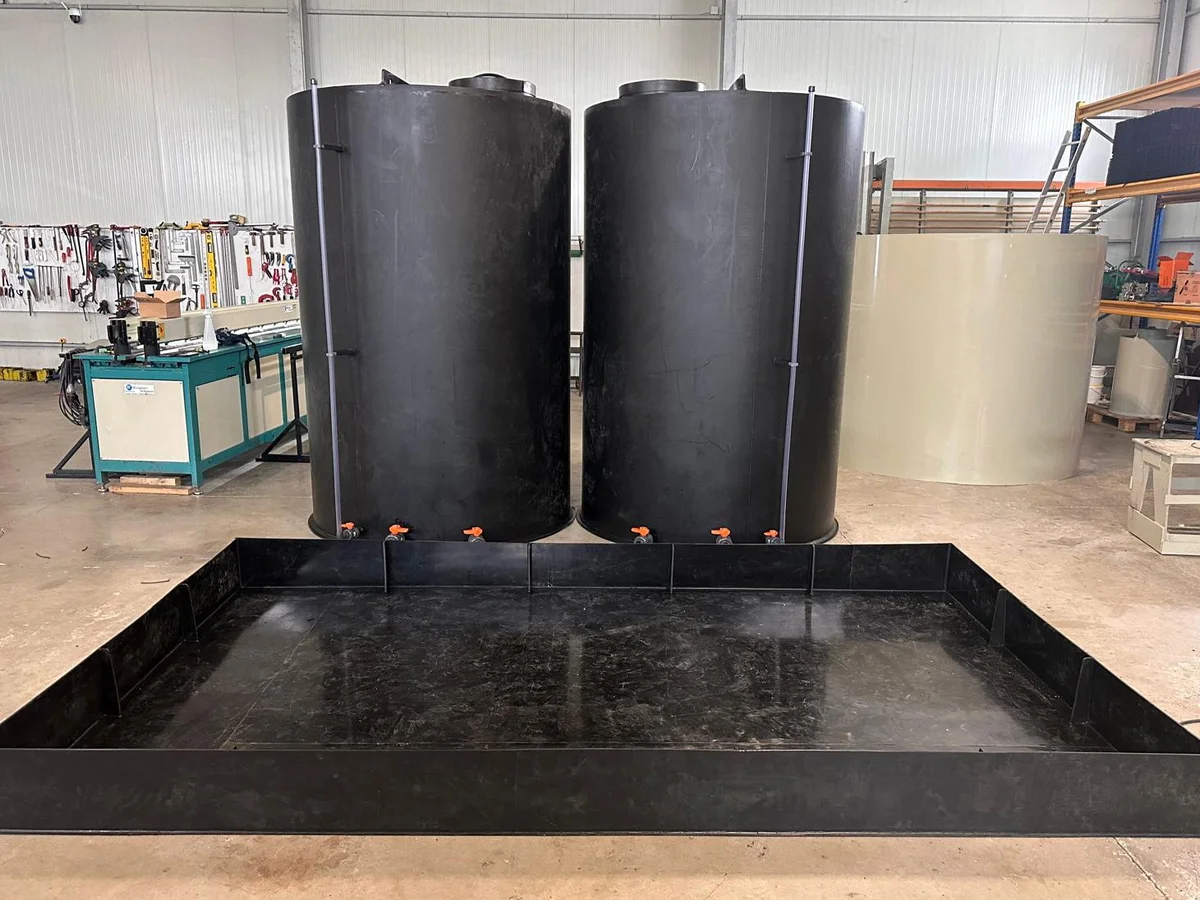
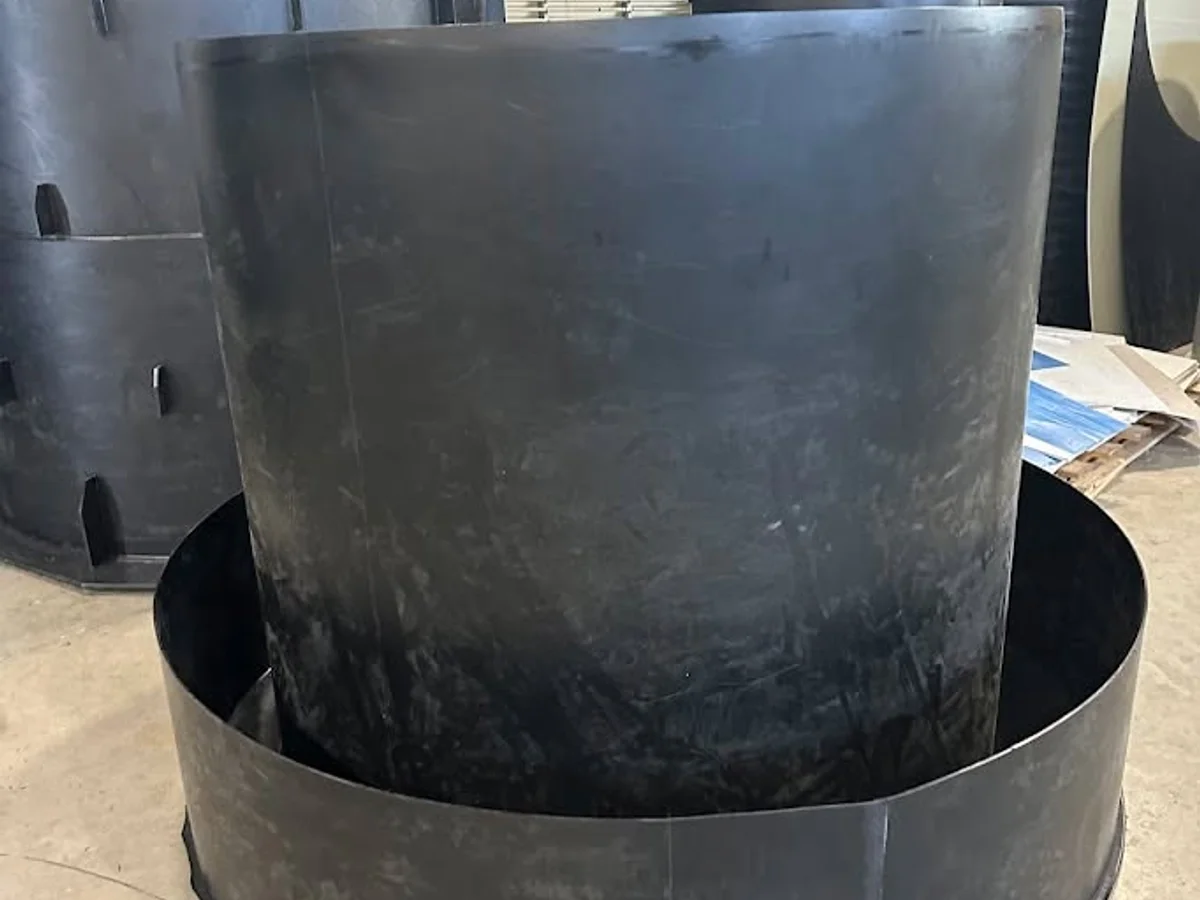
Hydrochloric acid tanks, including HCl 30%, welded to order from PE100 or PP-H, with a double wall or a bund. Vent to scrubber, level indicator and nozzles are placed to your drawing.

Material matched to your chemistry

PE100 or PP-H, chosen by acid, concentration and temperature. Wall thickness is calculated to DVS 2205 from the material producer's data.

Double wall or bund

Pick the leak protection that suits the site: a welded outer shell for a single tank, or a shared bund for several tanks.

Vent ready for your scrubber

The vent nozzle is positioned to connect to your plant's scrubber, so HCl fumes do not escape into the building.

Level and nozzles fitted in the shop

Fill, bottom drain, overflow and level indicator nozzles, plus the manway, welded in the positions shown on your drawing.

Stored medium

What we store and what we check for each chemical

Hydrochloric acid is our most frequent request, but the same tanks are built for other acids and alkalis. For each one, material and wall thickness are confirmed against your concentration and temperature.

Hydrochloric acid

Our most frequent request, including HCl 30%. It gives off corrosive fumes, so it needs a vent to scrubber and a double wall or bund.

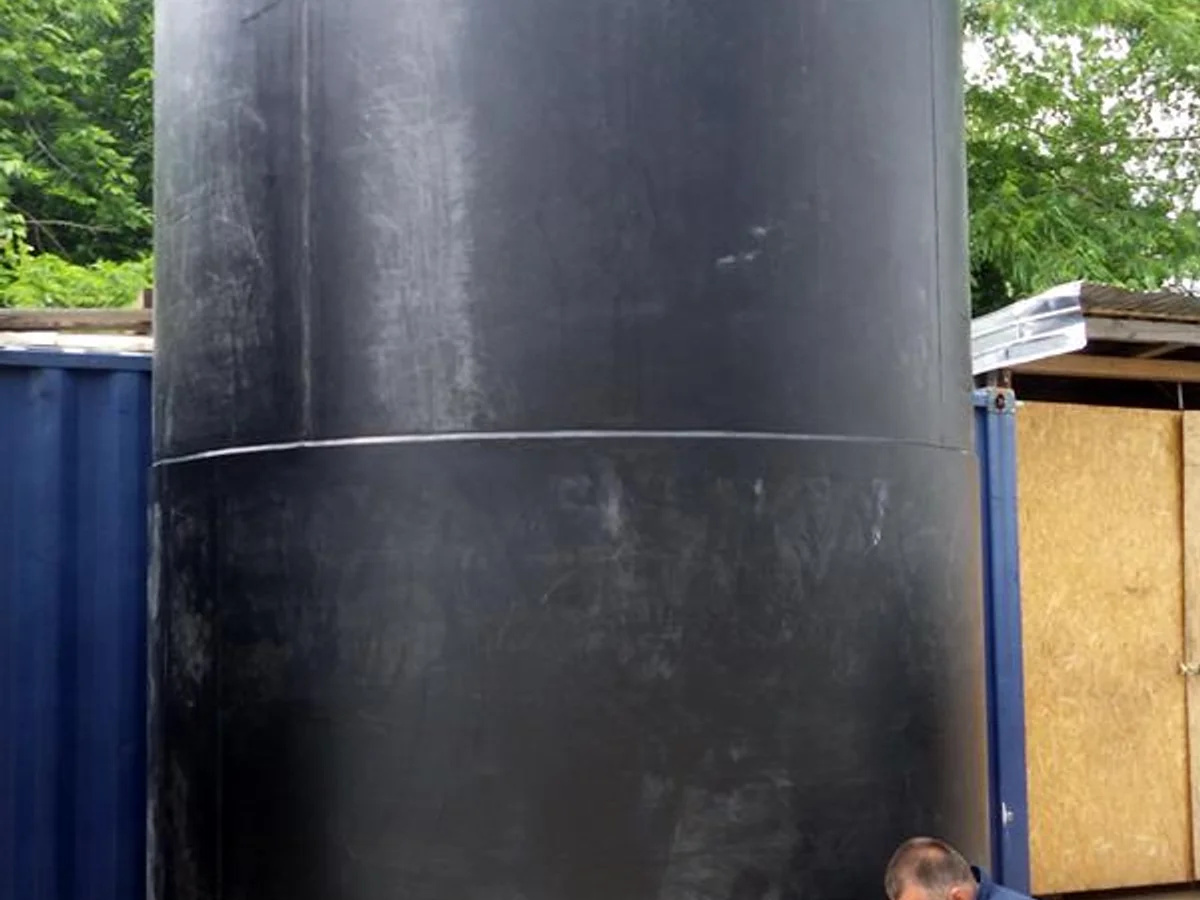
Delivered projectHCl 30% Storage Tank with Retention Basin
12345
  1. 1Fill connection
  2. 2Vent
  3. 3Level indicator
  4. 4Double wall
  5. 5Bund
Section: double-wall tank in a bund

01

PE100 or PP-H for an HCl tank: choosing the material

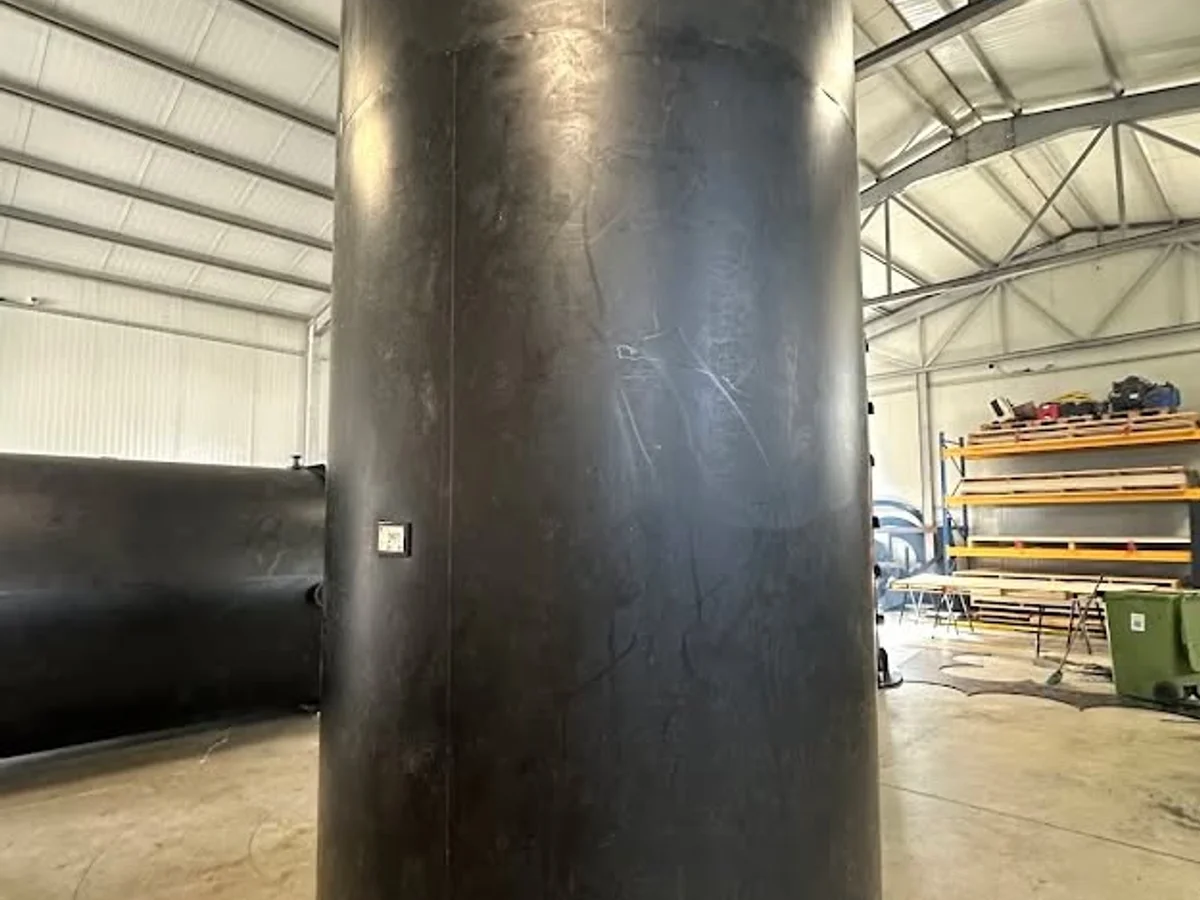
For hydrochloric acid, including HCl 30%, we most often weld tanks from PE100 or PP-H. There is no rule that fits every case: the choice depends on concentration, working and peak temperature, contact time and whatever else ends up in the tank. We have delivered, for example, a 12,000 L acid tank in PE100 and, for a plant in Câmpia Turzii, Romania, 25 m³ double-wall HCl tanks.

Wall thickness is never guessed. We calculate it to DVS 2205 from the volume, dimensions, liquid density and the material producer's data sheets. Welded thermoplastic tanks follow EN 12573, and the welding is done by DVS-certified staff. Hydrochloric acid is denser than water, so a tank designed for water is not automatically fit for acid. Where the chemistry calls for it, we also discuss PVDF.

02

Double wall or bund for chemical tanks

Spilled acid attacks concrete, rebar and any metal nearby, so leak protection is settled at quotation stage. A double-wall tank has the inner vessel enclosed in a second welded shell. It takes little floor space, suits a tank standing on its own, and the interstitial space can be checked visually or fitted with a leak sensor. That is how we built the 25 m³ HCl tanks for Câmpia Turzii.

With a bund, one or more tanks stand in a welded containment tray made from the same material. It works well when you have several tanks or want direct access to the bottom valves. The bund volume is set by your designer, based on your environmental permit. The HCl 30% tank we delivered in 2025 and our 7,000 L acid tanks were both built with a bund. Acids and alkalis, such as HCl and NaOH, never share a bund.

03

Hydrochloric acid fumes: venting and scrubber connection

Concentrated hydrochloric acid gives off corrosive fumes, especially during filling, when the air inside is pushed out. That is why an HCl tank should not vent freely into the building. We size the vent nozzle for the filling and emptying flow and place it so it can be piped to the scrubber or gas washing column in your plant.

If your plant has no fume treatment yet, tell us early. We have already delivered a welded exhaust gas treatment system with a ventilation filter. The overflow, discharging into the bund, and a sealed manway for inspection are agreed at the same stage.

04

Level indicator, nozzles and tanker filling

Level can be read on an external transparent sight tube, a mechanical float indicator, or a sensor wired to your control system. Nozzles are welded in the shop, flanged or socketed, where your drawing shows them: fill, bottom drain, pump suction, vent, overflow, level and recirculation. PVC-U, PP-H and PVDF valves and fittings are available from the Weldplast catalogue. If the tank is filled from a road tanker, ask for a high-level alarm that can be seen or heard from the unloading point.

For road tanker unloading, we agree the height and size of the fill nozzle, the coupling used by your acid delivery and the pipe route in advance. A fill pipe running down towards the tank bottom reduces splashing and fumes during filling.

05

What to send for a chemical tank quote

Nearly half of our customers send a drawing or a specification with their enquiry. That is the fastest route to an accurate quote, but a hand sketch with the main dimensions and nozzle positions is a perfectly good starting point.

Along with the drawing, we need the substance and concentration with its safety data sheet, the normal and maximum temperature, the working volume and the available space, including door sizes and building height. Tell us whether the tank stands indoors or outdoors, whether you want a double wall or a bund, how it will be filled, and whether you need transport and installation.

We build tanks up to about 35 m³ each. For larger volumes we propose several tanks or talk the project through in detail.
Gallery

Acid storage

Related Projects

Projects

Technical Specifications

Capacity
Made to order, up to ~35 m³ per tank
Materials
PE100, PP-H; PVDF where the chemistry needs it
Leak protection
Double wall or bund
Standards
EN 12573, DVS-certified welding

Applications

  • Hydrochloric acid storage in water and wastewater treatment plants
  • Tanks for coagulants and reagents: FeCl3, NaOH
  • Pickling, plating and surface treatment
  • Chemical industry: acid storage and dosing
  • Acid washing systems on oil platforms
  • Chemical stores with bunded tanks

Frequently asked questions

How much does a hydrochloric acid tank cost?

As an indicative range, a hydrochloric acid tank costs €600 to €8,000, depending on volume and complexity: material, wall thickness, double wall or bund, venting and nozzles. A complete project with several tanks, a shared bund and installation is quoted separately. Send us the concentration, the volume and a sketch and we will send you a firm quote.

Which material do you use for a 30% hydrochloric acid tank?

For HCl 30% we normally use PE100 or PP-H. The final choice depends on the actual concentration, working and peak temperature, and the other substances in your process. Wall thickness is calculated to DVS 2205 from the material producer's data sheets. We have delivered an HCl 30% tank with a bund and 25 m³ double-wall HCl tanks.

Double wall or bund: which is better for a chemical tank?

A double wall takes less space and suits a single tank, indoors or outdoors. A bund is practical when you have several tanks or want direct access to the bottom valves. The bund volume is set by your environmental permit or your designer. Acids and alkalis must sit in separate bunds. If you are not sure yet, send us the site layout and we will recommend one.

How are HCl fumes vented? Can the tank connect to a scrubber?

Yes. Concentrated hydrochloric acid releases corrosive fumes, mainly during filling. The tank gets a vent nozzle sized for the filling flow and positioned to connect to the scrubber or gas washing column in your plant. If you have no fume treatment yet, mention it when you ask for a quote: we have already delivered a welded exhaust gas treatment system.

How large can a hydrochloric acid tank be?

Every tank is made to order, with no standard sizes, up to about 35 m³. Dimensions follow the available space, building access and transport. For larger volumes we propose several tanks or discuss the project in detail. Delivered projects include 25 m³ HCl tanks, a 12,000 L PE100 acid tank and 7,000 L acid tanks in a bund.

Can you build tanks for concentrated sulfuric acid?

We have delivered hydrochloric and sulfuric acid tanks installed in a bund. With sulfuric acid, material suitability depends heavily on concentration and temperature, so we do not promise it before checking. Send us the concentration, maximum temperature and safety data sheet, and we will confirm from the material producer's data whether we can build the tank and in which material.

What should I send for an HCl tank quote?

A drawing, or a hand sketch with the main dimensions and nozzle positions, is the most useful start. Add the substance and concentration, the safety data sheet, normal and maximum temperature, working volume, available space, indoor or outdoor installation, double wall or bund, the type of level indicator and how the tank is filled. Tell us if you also need transport and installation.

Do I get certificates for the material and the welding?

Yes. Certificates for the PE or PP sheets come from the material producer, and the welding is done by DVS-certified staff to DVS 2201-2209. Welded thermoplastic tanks are built to EN 12573, with wall thickness calculated to DVS 2205. Tell us at quotation stage which documents your project requires, so we prepare them together with the tank.

Guides

Technical Resources

Quote request · data sheet

Configure your request

Choose the product, material, size and use, then send the request on WhatsApp or through the form. We settle the final dimensions together, for your project.

Material

Use

Your request

Tank PE100, volume 10,000 L, for acid (HCl, H₂SO₄).

Already have a drawing? Send it by email or on WhatsApp. Or call +40 729 542 142.

TANK · SKETCHREV. MADE TO ORDERVolume = 10,000 L
Drawn
Weldplast Technology
Design
European calculation software
Welding
DVS 2201-2209
Material
PE100
Standard
EN 12573
Dimensions
Made to order