01
10, 20 or 30 m³ water tank: how to size it
Start from consumption, not from a catalogue model. Multiply hourly or daily demand by the autonomy you need (one shift, one day, a weekend without supply) and add the reserve your process or fire design requires. That gives the usable volume, which is not the total volume: above it sit the overflow and vent space, below it the pump's minimum suction level.
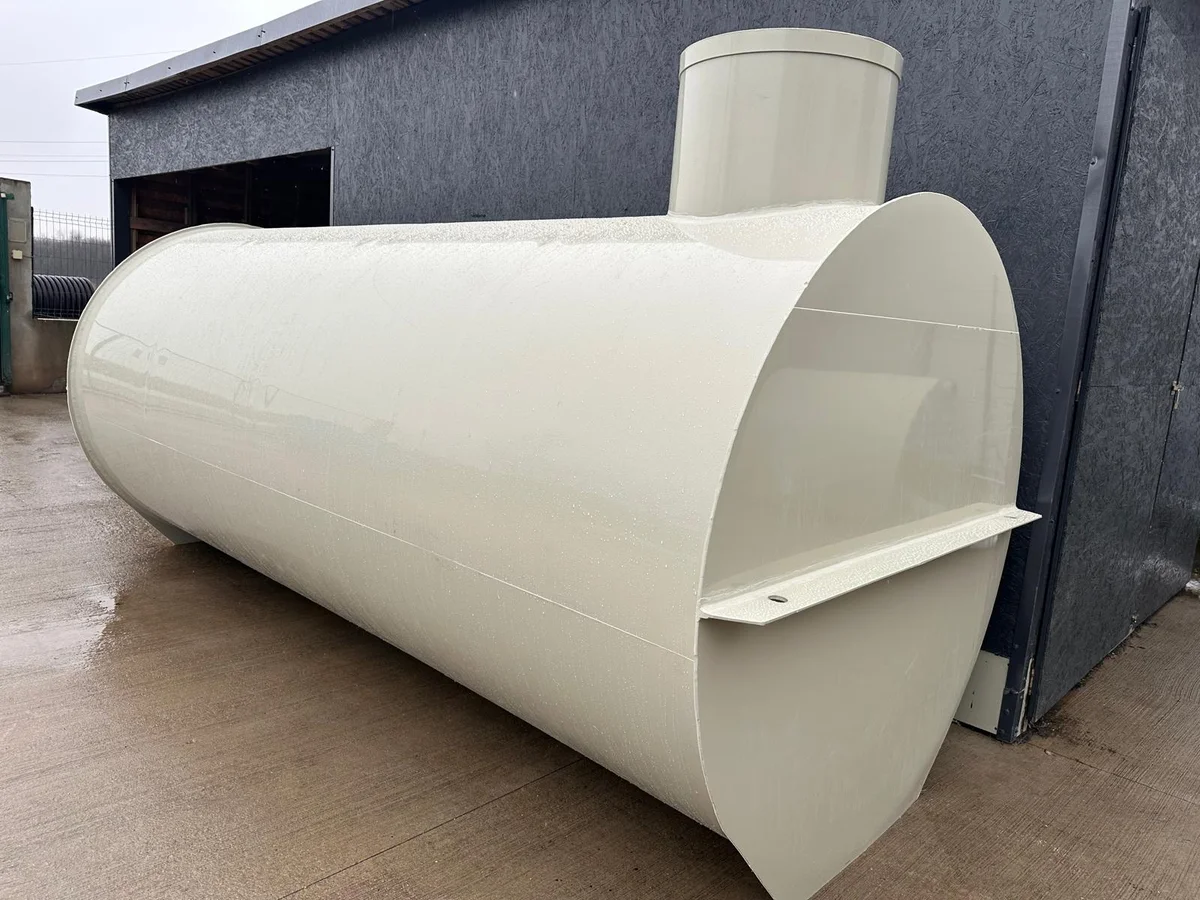
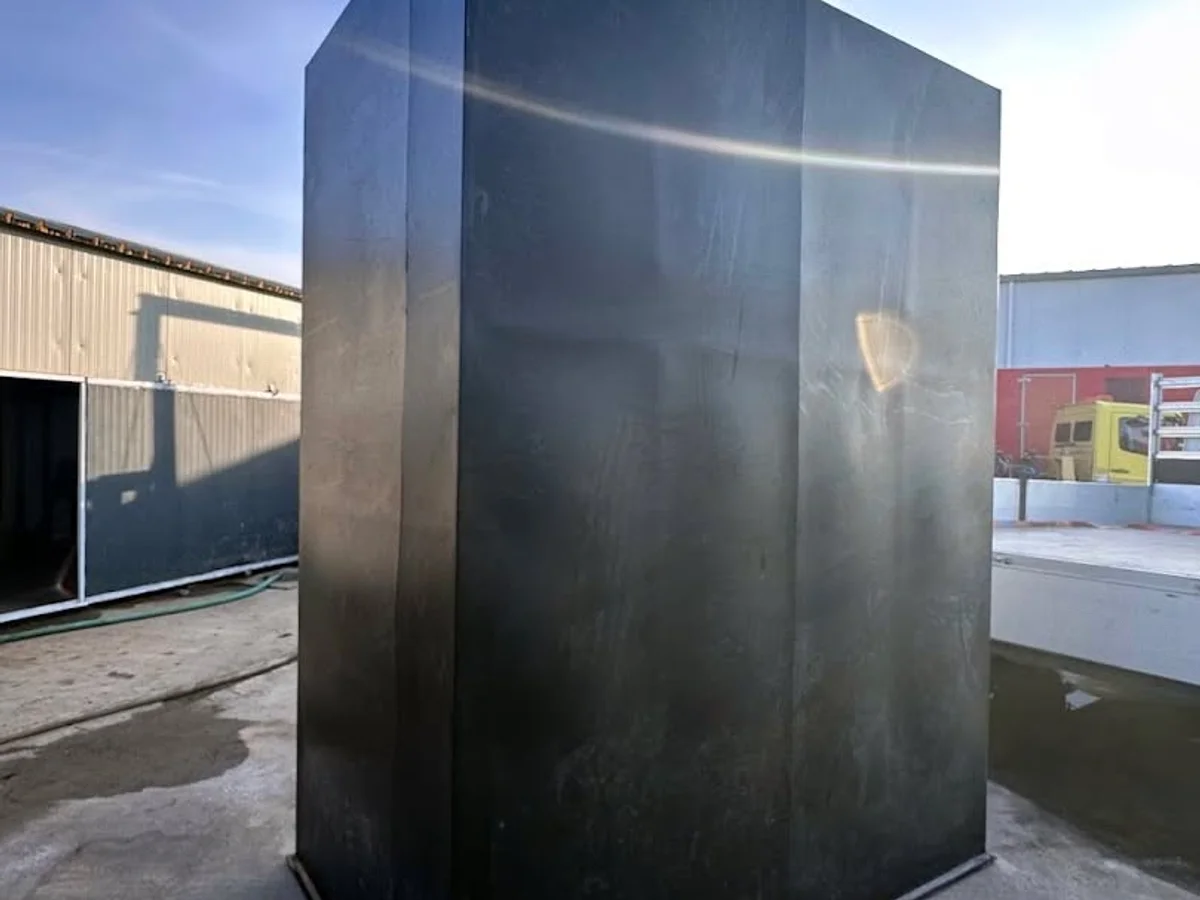
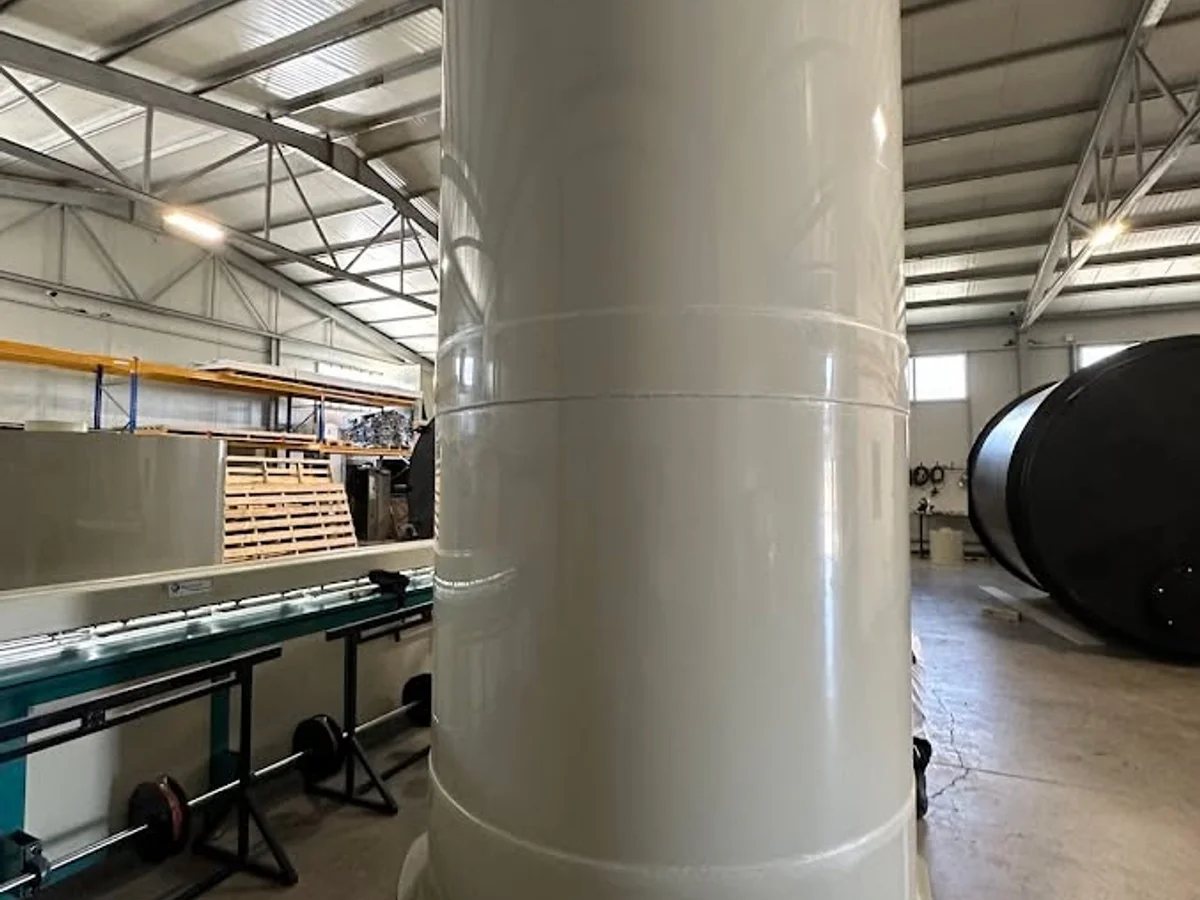
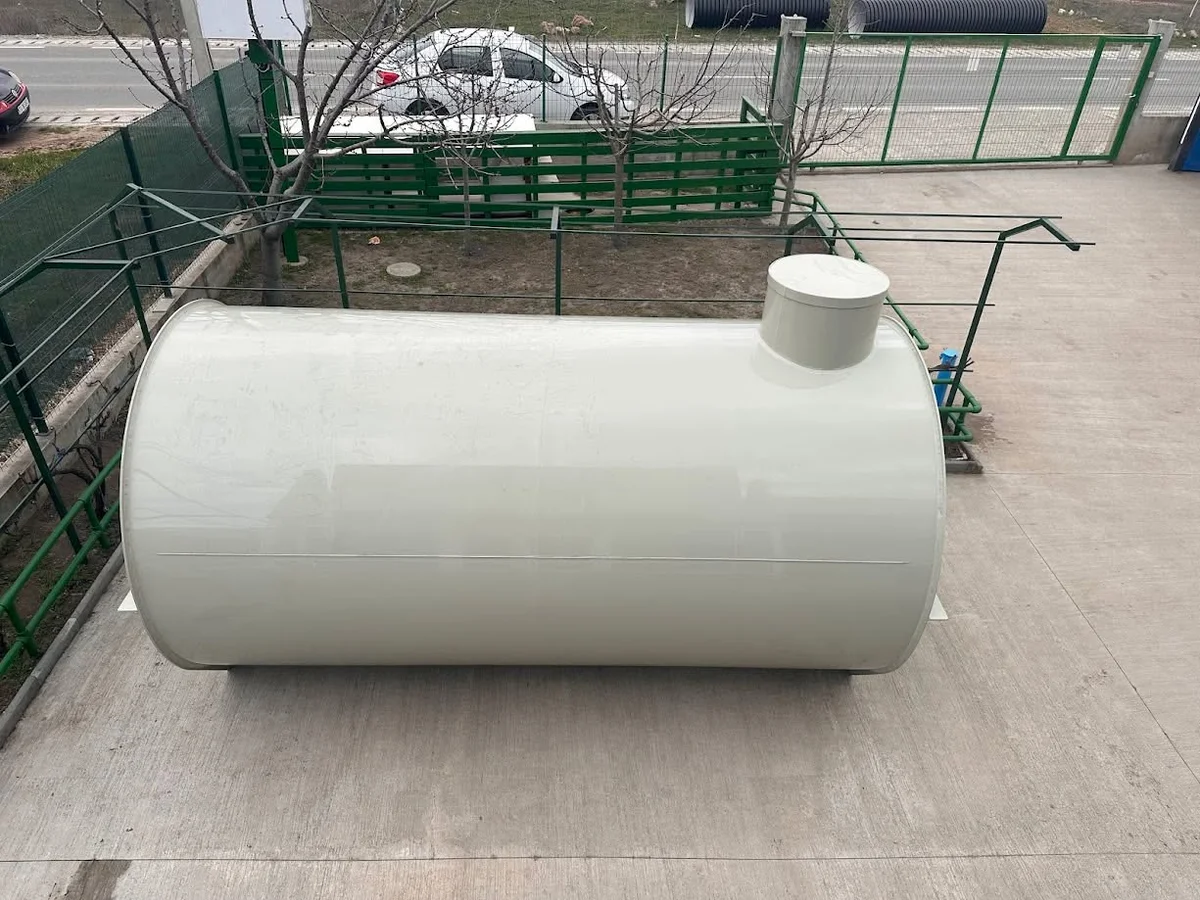
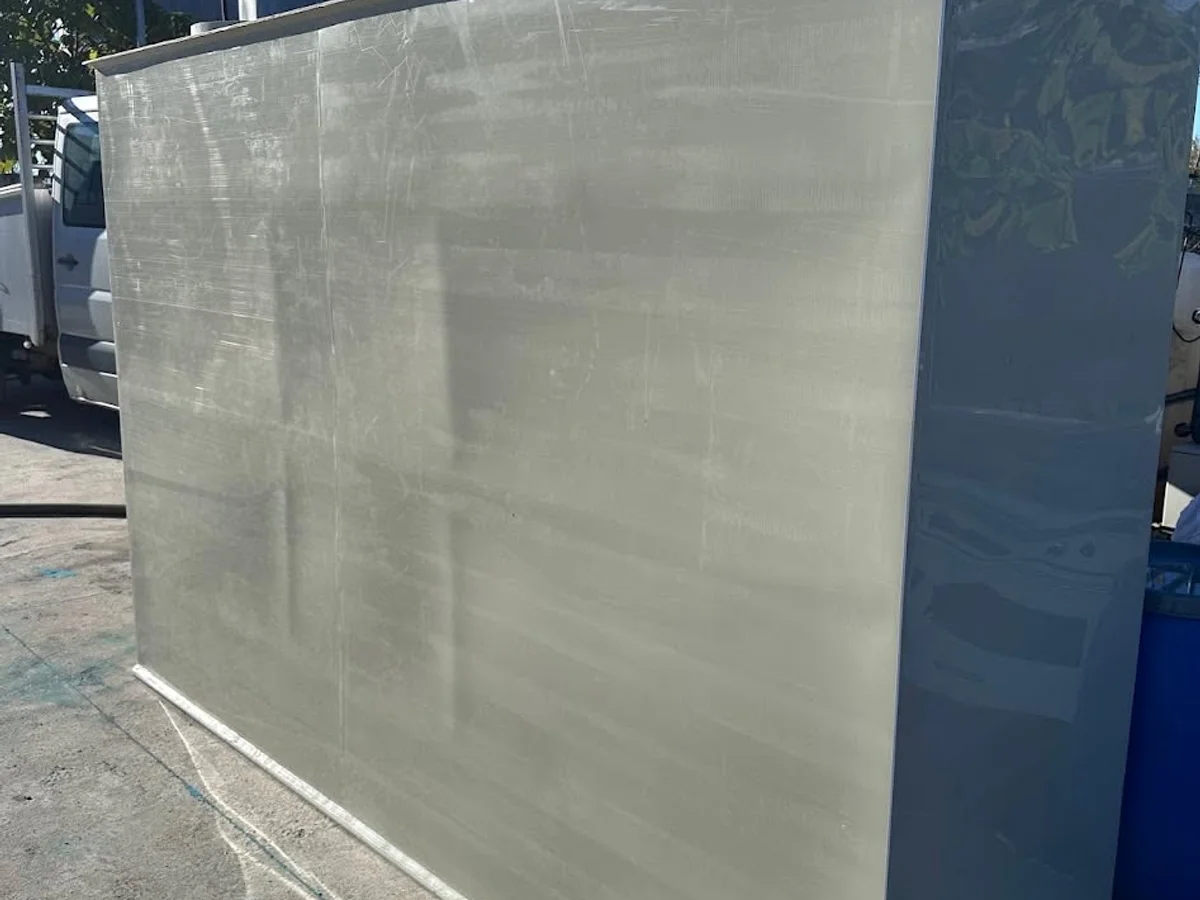
Then check the space. We do not work with standard sizes: diameter, height or length follow your building, door, slab or excavation, and the transport envelope. Water tanks we have delivered so far include 8,000 L, 17,000 L, 20,000 L, 25,000 L, 27,000 L and 35,000 L, each shaped for a different site.
We build up to about 35 m³ in a single vessel. If you need more, we propose two or more interconnected tanks: they fit the site and the truck more easily, and you can drain and clean one while the other stays in service.
02
Process, RO, fire or drinking water
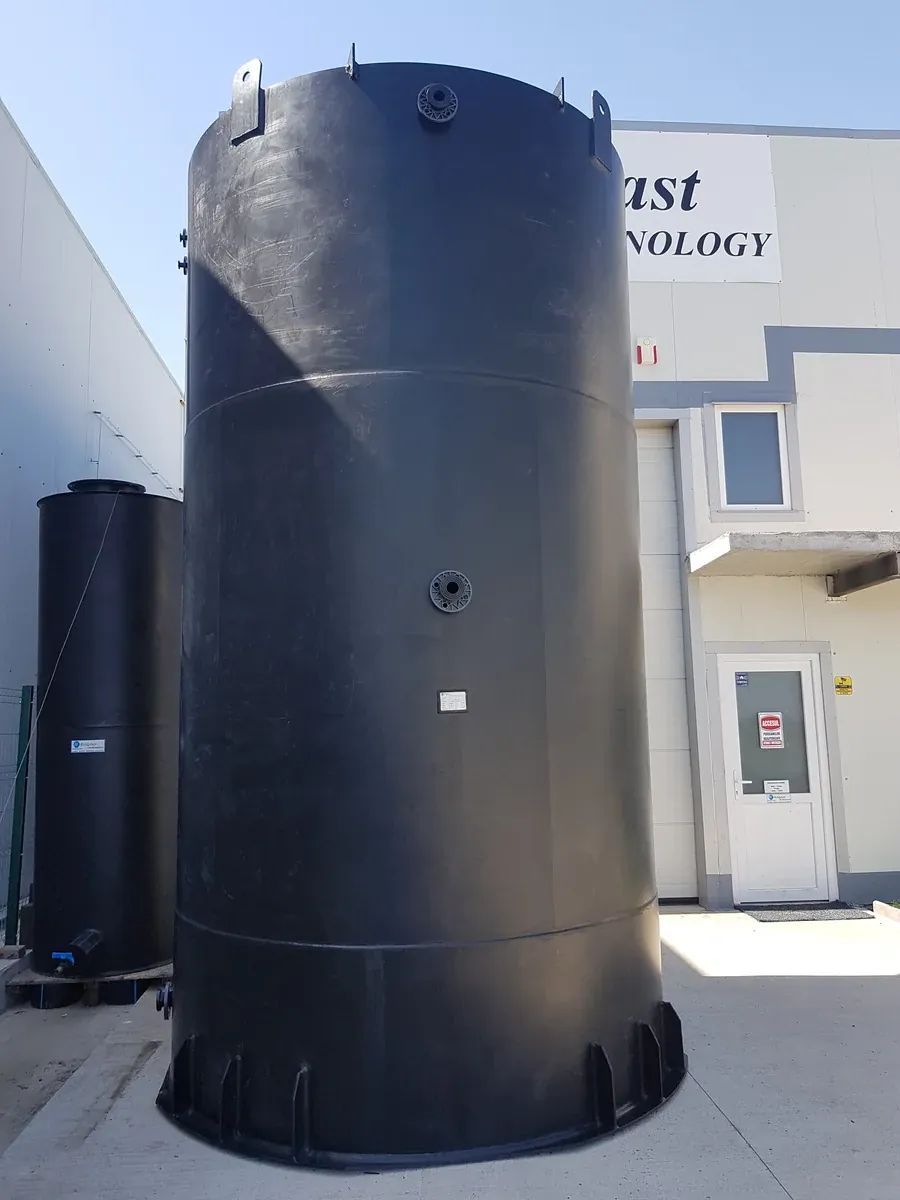
For process, utility or cooling water, the nozzles matter most: inlet, pump suction, return, overflow, drain, vent and level gauge, placed exactly where the installation needs them. We weld them in at the factory, so on site you only connect.
Softened or reverse-osmosis water should stay clean after you have paid to treat it. A welded PP or PE tank does not rust and has no paint or lining that can flake off over time.
For a fire water reserve, the dedicated volume and connections come from the fire safety design; our guide on fire water tanks covers what to clarify. For drinking water we use materials certified for contact with drinking water by the material producer, and we supply those certificates with the tank.
03
Above-ground or buried water tank
An above-ground tank needs a flat slab sized for its full weight. It can be insulated and fitted with a temperature-holding system, like the tank we delivered in Craiova, which matters most outdoors. Indoors it is shaped to the available height and access routes.
A buried tank is usually horizontal, with the manhole raised to ground level. Walls and stiffeners are calculated to DVS 2205 for soil pressure, any traffic load above and the groundwater level. Where groundwater is high, we anchor the tank against buoyancy uplift.
04
Welded PP/PE versus fibreglass or steel
Steel needs corrosion protection that has to be renewed, and off-the-shelf fibreglass tanks usually come in fixed models with predefined nozzles. A welded PP or PE tank does not corrode, and its shape and nozzles follow your installation, not the other way round.
If you later need an extra nozzle or the tank gets damaged, it is repaired by welding with a welding rod of the same material. For volumes well above 35 m³ in a single vessel, a concrete basin or a steel tank may be the better choice, and we will tell you so.
05
Send us your sketch: what we need for a quote
Nearly half of our customers send a drawing or specification straight away, and it is the fastest route to an accurate quote. No drawing? A hand sketch with the available space, main dimensions and nozzle positions, photographed on your phone, is enough.
Along with the sketch, tell us what water you store and at what temperature, the usable volume, the placement (indoor, outdoor or buried), nozzle sizes and the extras you want: level gauge, insulation, double wall, lid with manhole. We select the material and wall thickness from the material producer's data sheets and a DVS 2205 calculation.