6 min read
The right choice starts with users, daily flow, discharge point and authority requirement. A three-chamber septic tank is pretreatment; a package plant is a more complex treatment solution.
Quick specification table
| Existing Weldplast data | WELD 3,750 L, 10,000 L and a 28,000 L three-compartment tankValues from public projects; septic tanks and solutions are made to order, in any dimension required by the project, with no fixed standard sizes. |
|---|---|
| Relevant standard | SR EN 12566 — small wastewater treatment systems up to 50 PTThe applicable part differs for prefabricated septic tanks, package plants or other components. Confirm in the project. |
| Sizing inputs | Users, daily flow, peaks, soil, discharge routeCorrect sizing combines chamber count with volume, flow and discharge conditions. |
| Maintenance | Sludge emptying / equipment serviceA septic tank is simpler; a package plant needs checks of equipment and biological process. |
Three-chamber tank vs package plant
Three-chamber tank
Pretreatment + settling
Fits projects that allow a simpler solution, with periodic emptying and an accepted discharge/filtration route.
Package plant
Compact biological treatment
Fits when a more controlled effluent is required; needs power, aeration, service and more frequent checks.
Compare more than chamber count
“Three chambers” describes compartments; final performance is established from usable volume, retention time, peak flow, sludge, soil and effluent destination.
For houses, guesthouses or site facilities, ask the designer for population equivalent and discharge conditions before ordering.
Where SR EN 12566 fits
SR EN 12566 is the European family for small wastewater treatment systems. It has different parts for prefabricated septic tanks and package plants; a general reference should be paired with the concrete product document.
For a publishable offer, confirm the delivered model document per project: material conformity comes from the material supplier certificates, welding is DVS-certified by Weldplast, and finished-product performance is confirmed for the application.
Checklist before choosing
- 1Count permanent and occasional users.
- 2Record estimated daily flow and peaks.
- 3Clarify where effluent discharges and what the authority requires.
- 4Plan access for emptying and maintenance.
- 5Request the model, usable volume and SR EN 12566 documents that apply.
- 6Keep the specialist design as the main reference, supported by the orientation table.
Short FAQ
Is a three-chamber tank equivalent to a package plant?
They are different solutions. A three-chamber tank settles/pretreats, while a package plant includes biological treatment and equipment.
Can I size only by number of people?
People count is the starting input. For correct sizing, flow, peaks, soil, discharge and local requirements are checked as well.
Which Weldplast values are public?
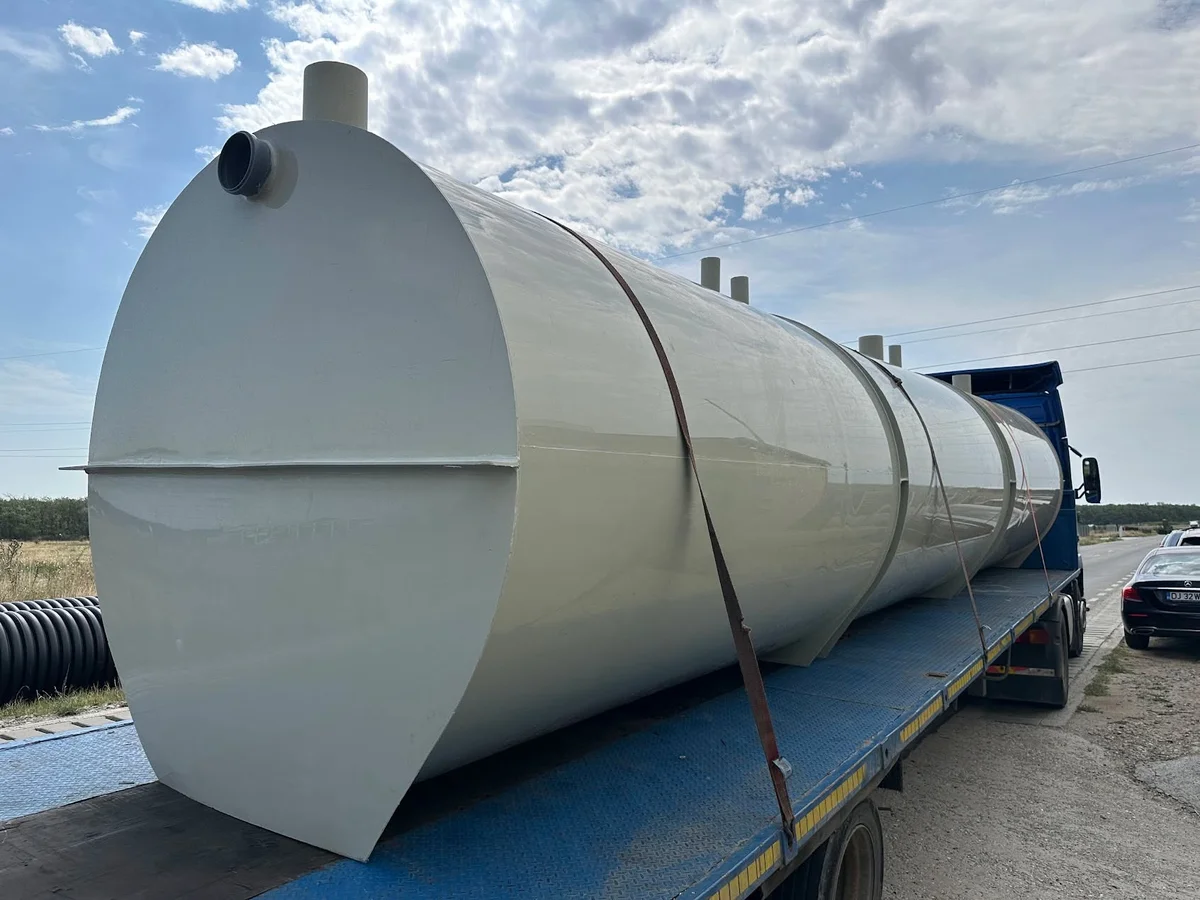
Public projects mention WELD 3,750 L, WELD 10,000 L and a 28,000 L three-compartment tank.
Useful links
Have the user count and discharge condition?
Send usage data and the permit requirement to choose a PP septic tank or another solution.
Request QuoteSources and limits
- Existing Weldplast content: the separators page includes septic tanks in applications; public projects list 240 septic tanks, WELD 3,750 L, WELD 10,000 L and a 28,000 L three-compartment tank.
- SR EN 12566 is the standards family for small wastewater treatment systems up to 50 PT; the applicable part must be confirmed per product and project.
- Treatment performance and the finished product are confirmed per model and project; prices are confirmed through a quote. Material conformity comes from the material supplier certificates, and welding is DVS-certified by Weldplast.