5 min read
A good pontoon is sized by load, stability, access and water regime. On navigable waters, administrative checks should start before fabrication.
Quick specification table
| Existing Weldplast data | Flexible modules, HDPE floats, anti-slip platforms, optional railingsFrom the aquaculture/pontoons page; each pontoon is sized made to order, in any dimension required by the project, with no fixed standard sizes. |
|---|---|
| Published bearing range | 200–500 kg/m²Weldplast value; final design depends on floats, load distribution and stability. |
| Published applications | Jetties, leisure, maritime port, access platformsExamples from Midia, Gherla, Ovidiu and Clisura Dunării projects. |
| Authorization | ANR/harbour authority + water administrator: check before installationThere is no publishable generic exemption. For works on or connected to waters, check the water-management permit/authorization; on navigable waters or for vessels/floating structures, request written ANR/harbour authority/water-administrator confirmation. The ANR catalogue lists services including inland-navigation vessels under construction with D > 15 t or CI > 15 t; D/CI thresholds are not a publishable site-permit exemption. |
Bearing capacity is checked together with the site
Useful load must be checked together with people distribution, equipment, access, waves, wind, variable water level and mooring.
The public Weldplast range of 200–500 kg/m² gives a starting point; design approval is checked for each site.
What to check for navigable waters
For navigable waters or port areas, check ANR/harbour authority, water administrator and local authority requirements early.
Publish only a verification gate, not a general exemption claim. For each project, request written confirmation for the address, site and purpose from the water administrator and, on navigable waters, from ANR/harbour authority.
Pontoon checklist
- 1Purpose: leisure, mooring, work, fish farming or access.
- 2Dimensions required by the project, user count and point loads.
- 3Water conditions: waves, wind, level, currents, ice.
- 4Float type, anchoring and shore connection.
- 5Need for railings, anti-slip access, lighting or utilities.
- 6Request written confirmation from the water administrator and, on navigable waters, from ANR/harbour authority; also check the D/CI categories in the ANR catalogue.
Short FAQ
Is 500 kg/m² guaranteed everywhere?
The 500 kg/m² value is part of the public range. For each site, the project is checked by configuration, loads and water conditions.
Does ANR authorize every pontoon?
ANR/harbour authority may be relevant on navigable waters or port areas. The exact need is confirmed per site.
Which Weldplast projects are relevant?
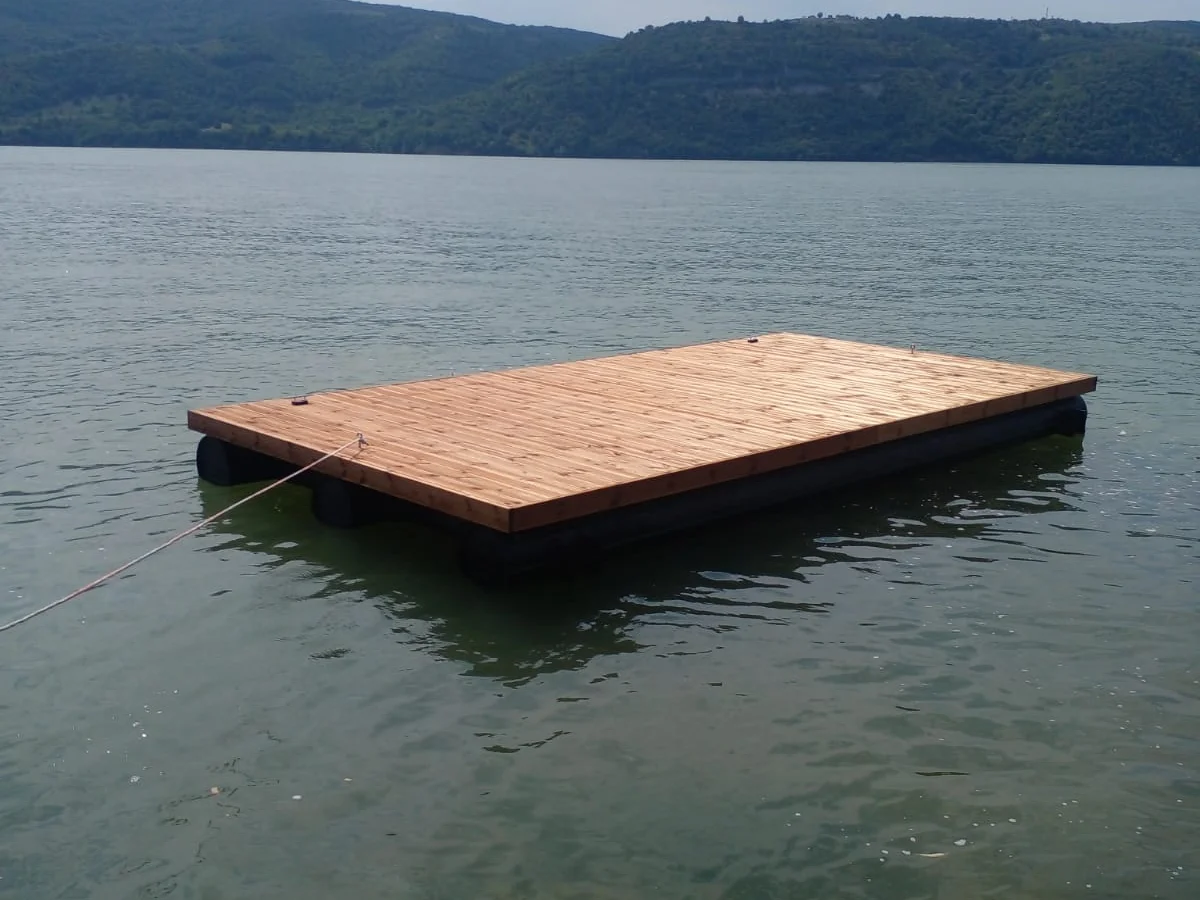
The portfolio includes Midia, Gherla, Ovidiu, Clisura Dunării pontoons and floating systems for cable parks.
Useful links
Have the site and loads?
Send the pontoon sketch, use case and water conditions for a verifiable HDPE setup.
Request QuoteSources and limits
- Existing Weldplast content: the pontoons page mentions HDPE floats, flexible modules, anti-slip platforms, optional railings and 200–500 kg/m².
- Public Weldplast projects: Midia, Ovidiu, Gherla, Clisura Dunării and cable-park floating systems.
- Romanian Water Law arts. 48/53/54 and the ANR service catalogue support checking permit/authorization needs and D/CI categories, not a universal exemption; the final procedure remains site-specific.